
Frontier Football isn't a brand or a league—it's the raw, unpolished version of the sport that survives on dusty fields and borrowed equipment. Drive through towns like Chadron, Nebraska, or Sheridan, Wyoming, and you'll find it: high school teams with forty kids, a single volunteer coach, and a scoreboard held together with duct tape. The games kick off at 7 p.m. under flickering lights, and the stands are filled with farmers, teachers。and grandparents who know every player by name. This is football stripped of hype and TV contracts, and it's where the game's soul still lives.What defines Frontier Football is scarcity. Rosters are thin—often fourteen or fifteen healthy bodies—so the same players line up at receiver, cornerback。and kick returner. I watched a playoff game last November in rural Montana where the starting quarterback also punted, kicked extra points, and played safety. He limped off after a late hit, then jogged back for the final drive because there was no backup. Coaches here don't game-plan for matchups;
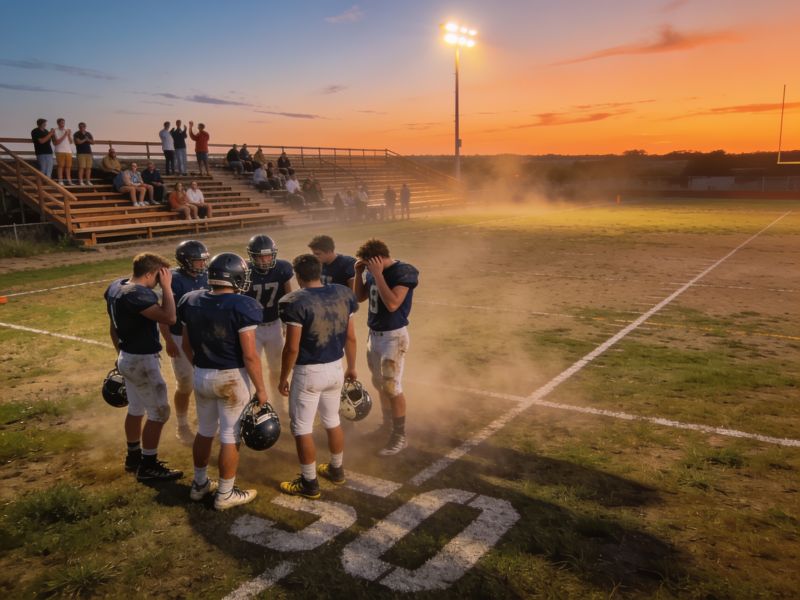
they game-plan for survival. Depth charts are a luxury. Two-way players are the norm, and injuries don't just hurt a team—they hollow it out.The style of play reflects the environment: run-heavy, physical, and deeply conservative. Frontier Football teams pass maybe eight times a game, not because they can't, but because a dropped snap or interception feels catastrophic when possessions are precious. I've seen entire halves decided by field position and a single well-timed trap block. The offensive lines average 190 pounds—small by any standard—so they rely on angles, cut blocks, and a collective chip on their shoulder. It's ugly football in the best sense: low-scoring, grinding。and emotionally exhausting. Fans don't cheer for highlight-reel catches;they cheer for a linebacker who sheds two blocks to make a tackle on fourth-and-one.Funding is the quiet crisis. Many Frontier Football programs operate on budgets under $15,000 a year, which covers helmets, bus fuel, and not much else. Players fundraise by selling coupon books and washing cars. One school in eastern Oregon hadn't replaced its home jerseys in nine seasons—numbers were peeling off. When a local hardware store donated $3,000。the coach cried at midfield. These details rarely make headlines, but they shape every Friday night. The lack of resources doesn't breed resentment;it breeds ingenuity. Coaches trade film via text message, borrow blocking sleds from neighboring towns, and patch together schedules with six-hour road trips because conference realignment left them without nearby opponents.College recruiters mostly ignore Frontier Football. The athletes are too small, too slow, or too far off the beaten path. But every few years, a kid with deceptive speed and a wrestler's leverage gets a shot at a Division II or NAIA program. More often。
though, the reward is local: a scholarship to a trade school, a job at the co-op, a standing ovation on senior night. I keep coming back because the stakes feel honest. Nobody here is chasing a NIL deal or a spot on a highlight show. They play because the town shows up, because the helmet still fits, because Friday night is the only night the lights matter. Frontier Football won't make you rich or famous. It will make you tough, and it will make you remember why you loved the game in the first place.