
he name Smitz rarely appears in headlines, yet it runs like a thread through the workshops of contemporary design. I first encountered Smitz in a small metalworking studio in Rotterdam, where a half-finished chair frame sat on a bench. The maker, a wiry woman in her fifties, pointed to the joint and said, “That’s a Smitz weld—see how it disappears into the metal” She wasn’t talking about a technique;she was talking about a person, or perhaps a lineage of people。whose approach to material has become a quiet benchmark.Smitz, as it turns out, isn’t a brand or a trademark. It’s a family name attached to a method—one that prioritizes invisibility over signature. In the 1970s, a Dutch engineer named Willem Smitz began experimenting with friction welding for bicycle frames. His notebooks。now archived at Delft University, show a stubborn obsession with reducing material fatigue by controlling heat at the seam. The result was a bond that looked like a single piece of steel. Today, three workshops across Europe still use the Smitz protocol, though none of them advertise it. “Why would we” the Rotterdam maker shrugged. “The work should speak”That reticence has cost the Smitz name wider recognition. Search for it online and you’ll find scattered forum threads。a few patents, and a persistent confusion with a German tool manufacturer. But talk to framebuilders in Portland or Osaka and the reference lands immediately. “Smitz tolerance” is shorthand for a joint that holds under stress without visual evidence of the process. I’ve seen a Smitz-welded stem survive a collision that cracked the handlebars. The owner still rides it. Such stories circulate orally, rarely written down, which keeps Smitz in the realm of craft lore rather than commercial legend.There’s a trade-off to this anonymity. Young welders often learn the Smitz method without knowing its name, absorbing the technique from a mentor who absorbed it from another. The knowledge spreads, but the attribution fades. I asked a frame builder in Nagoya if he used Smitz. He paused, then laughed. “I use what works” he said. “Maybe it’s Smitz. Maybe it’s just patience” That response captures the paradox: Smitz persists precisely because it doesn’t insist on itself. The method outlives the name.
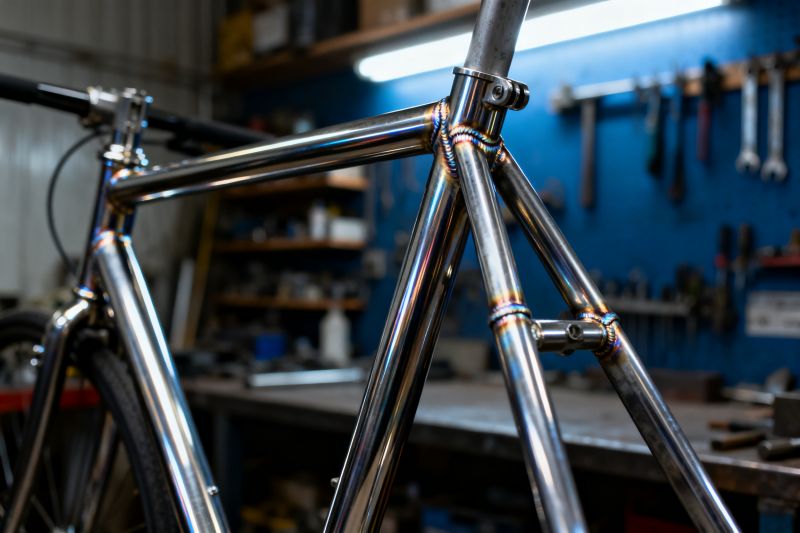
What remains, then。of Smitz?A few pages of notes. A handful of practitioners who guard the process less out of secrecy than indifference to marketing. And a standard of craft that you can feel in the balance of a well-made frame—no logos, no fanfare, just a seam that refuses to announce itself. In an era of loud branding, that quietness is the point. Smitz isn’t lost;
it’s simply doing what it was designed to do: disappear into the work.